
Summarised below. Click for Complete Article
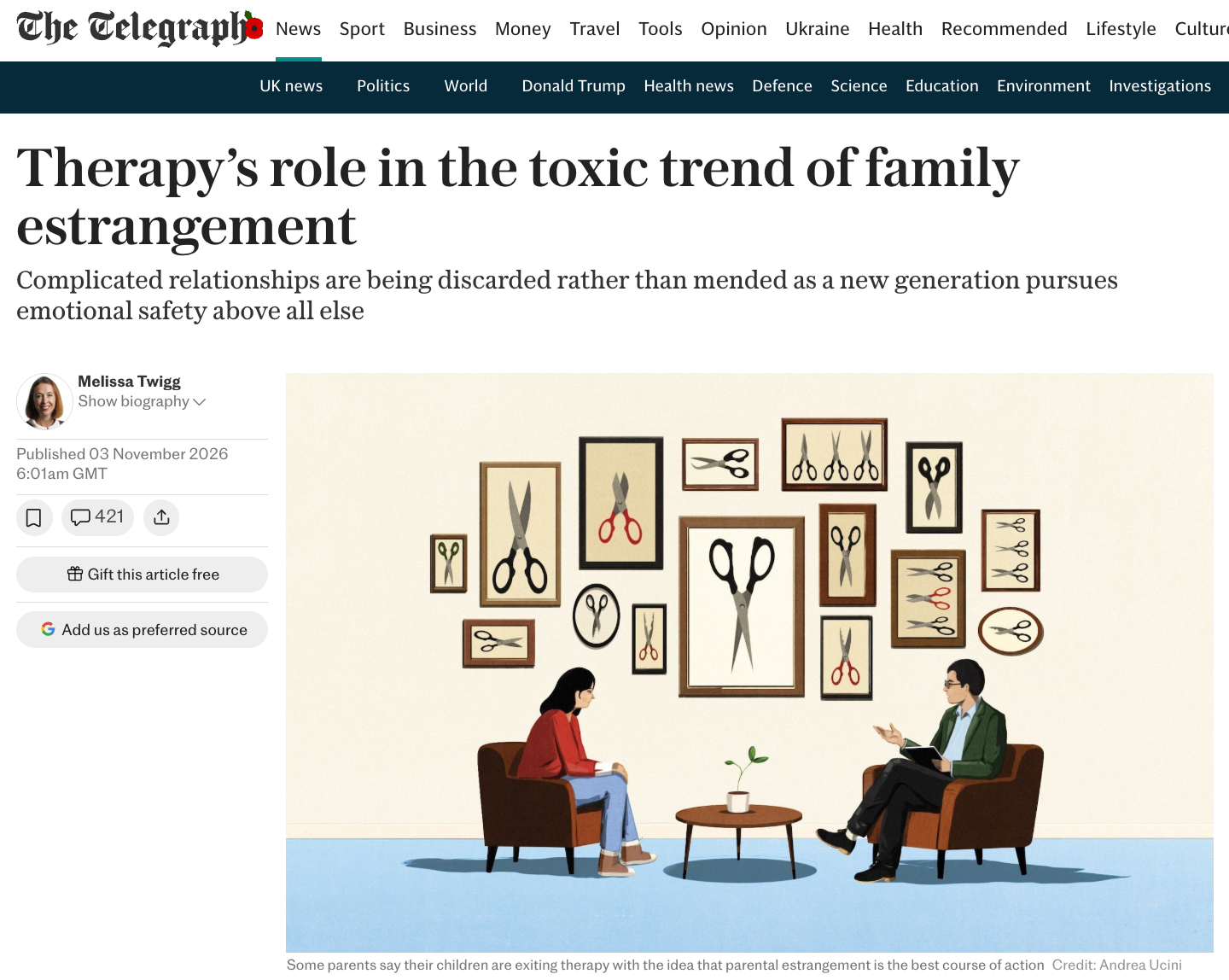
Family estrangement is an increasingly prevalent trend across Western societies, driven in part by modern therapy culture. Data highlights this surge, with a 2025 YouGov poll showing 38 per cent of American respondents are estranged from at least one immediate family member, while a German study found significant periods of estrangement from fathers and mothers. In England, the number of students awarded finance due to parental estrangement rose by 53 per cent between 2017 and 2025. This trend is also highly visible in celebrity circles, with high-profile figures like Brooklyn Beckham and Adam Peaty experiencing family rifts, and the children of Tom Cruise and Brad Pitt dropping their fathers’ surnames.
Many estranged parents are entirely blindsided by these ruptures. Anne, for example, learned of her daughter’s wedding from a former neighbour while shopping in Sainsbury’s, a shock that left her physically shaking. Like many in her position, Anne believes her daughter’s therapist orchestrated the estrangement after her daughter began dwelling on minor childhood grievances. Anecdotes from other parents—including a retired Yorkshire lawyer accused of betrayal over a shared confidence, and an Essex mother cut off by a daughter who suddenly labeled her a “toxic narcissist”—echo this pattern. These parents frequently report receiving sudden, therapist-influenced communications that demand the severing of all ties.
Psychologist Joshua Coleman attributes this trend to a profound cultural shift. Traditional family ideals centered on duty, tolerance, and the acceptance of difficult personalities have been replaced by a modern expectation that all relationships must be emotionally safe. Consequently, severing ties is increasingly viewed not as a desperate last resort, but as a brave assertion of personal boundaries. Standard disciplinary actions or common parenting mistakes from the past are now frequently reframed by some practitioners as trauma or abuse, with therapists stepping into the role of moral arbiters regarding who deserves to remain in a person’s life.
The structure of the therapy industry also plays a role. While psychologists are regulated healthcare professionals expected not to direct clients toward specific outcomes, counsellors and psychotherapists lack statutory regulation, leaving clients vulnerable to unprofessional guidance. Coleman notes that practitioners often exhibit an inherent bias toward their clients’ perspectives, sometimes prematurely diagnosing unseen parents with personality disorders and actively discouraging family reconciliation.
However, some professionals argue that estranged parents may be unreliable narrators who minimize their own past behaviors. Therapist Ayo Adesioye contends that adult children usually view estrangement as a tragic final option. They typically pursue this path only after multiple attempts to establish boundaries and communicate grievances have been dismissed by the parent. When parents repeatedly refuse to acknowledge their children’s feelings, continuing the relationship can become emotionally untenable.
Ultimately, the expanding therapeutic vocabulary of “toxicity” and “boundaries” has made society adept at identifying family harm, but less capable of recognizing the family unit’s inherent value. Author Richard L Blake warns that in the rush to blame parents, people risk losing one of their greatest protections against mental illness. For estranged parents, the profound tragedy lies not only in the sudden loss of their children but in being denied the opportunity to apologize, repair the relationship, and prove they can evolve.


